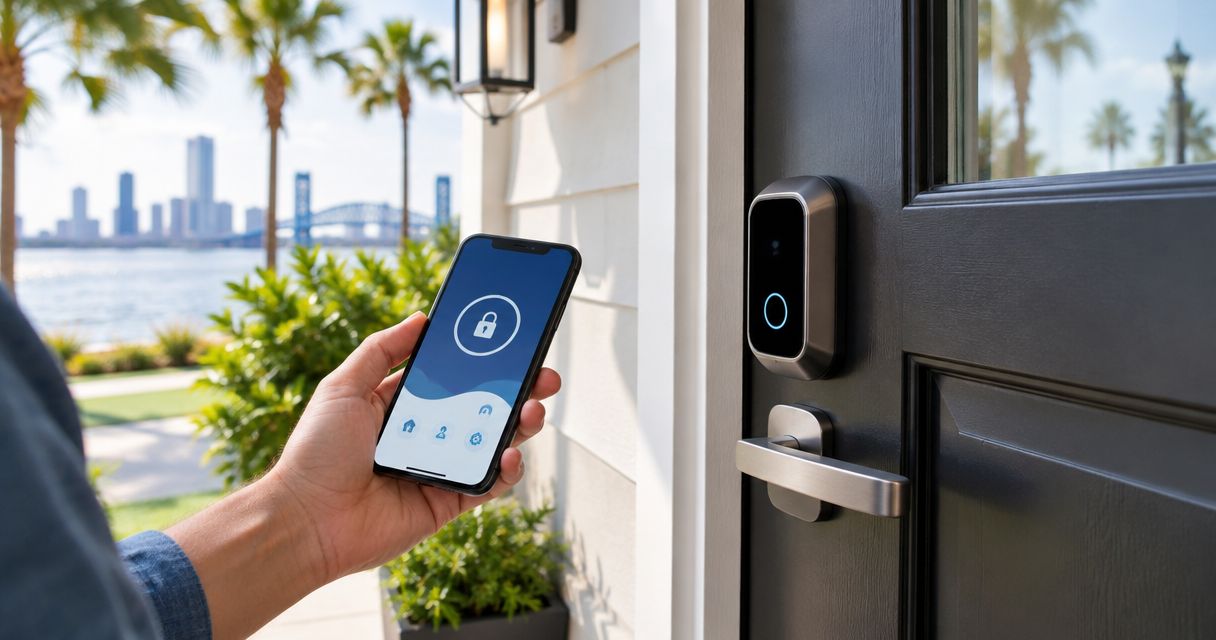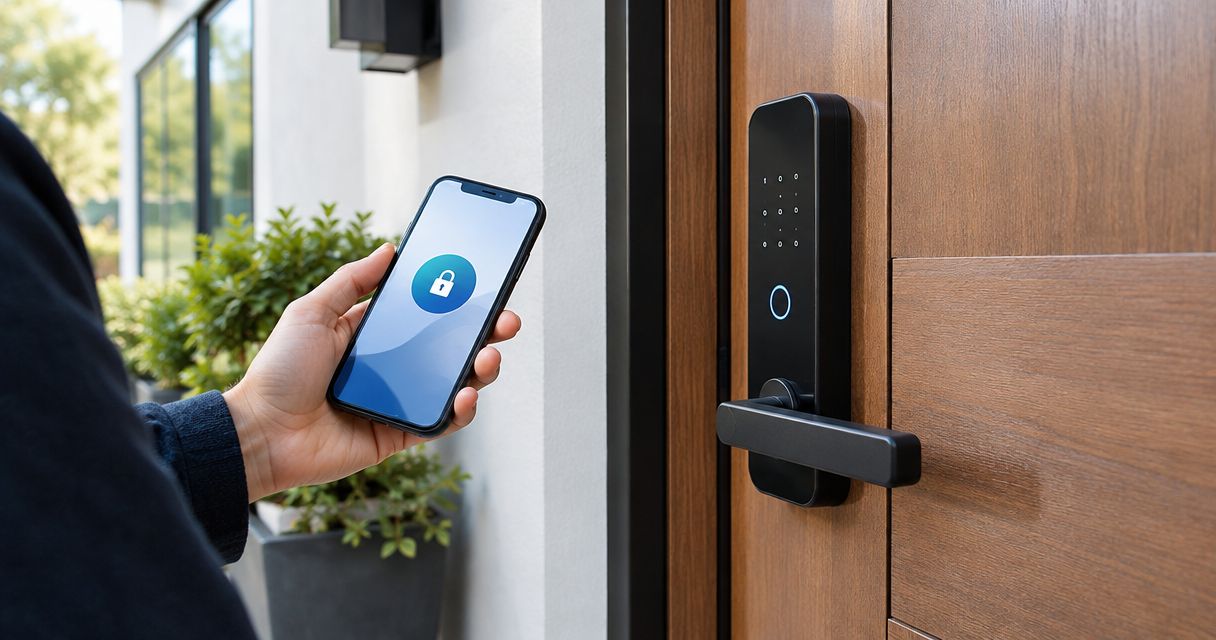
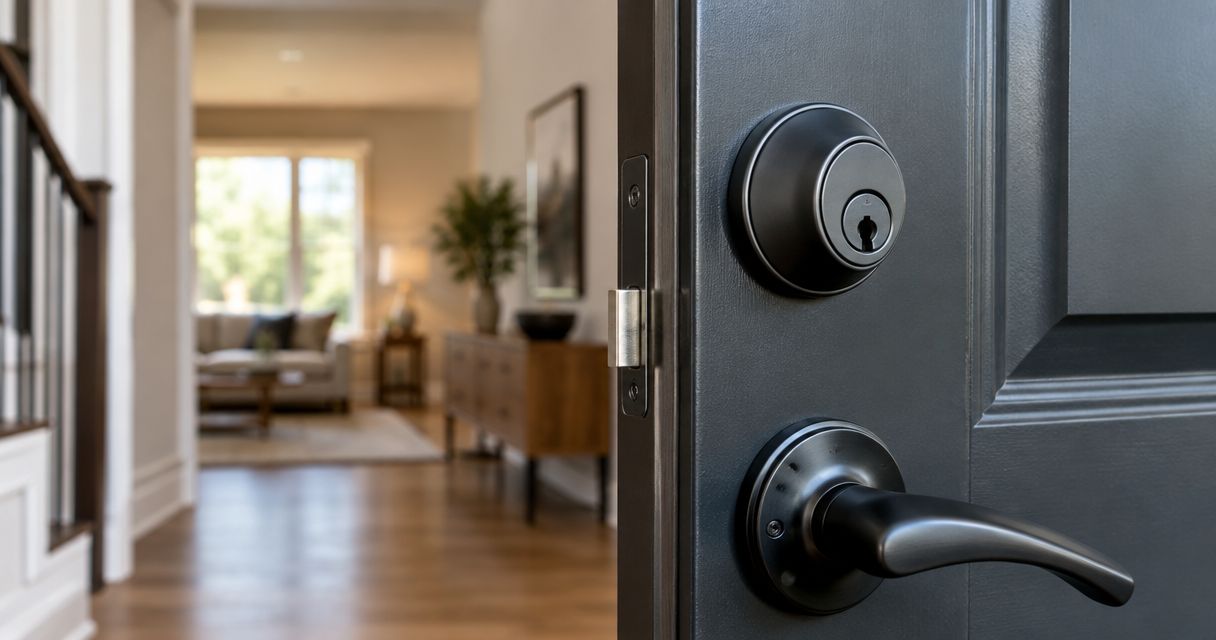
Best overall: a single-cylinder mechanical deadbolt. Best for offline keyless entry: a nonconnected keypad deadbolt. Best for remote access: a connected smart deadbolt. This 2026 guide compares the best deadbolt locks for home security by how you enter, manage access, and maintain the lock—not by how many features appear on the box.
- The best deadbolt locks for home security match your door, access needs, and emergency exit requirements.
- Choose a single-cylinder mechanical deadbolt for straightforward daily use without batteries.
- Choose a nonconnected keypad for local access codes; choose a connected smart deadbolt for remote access.
- Primeaccesslocksmith provides on-site lock changes and re-keying for Jacksonville homeowners who need help replacing or managing locks.
Why this matters
A deadbolt protects an opening, not just a keyhole. The door, jamb, strike plate, and installation determine whether the lock has a solid structure to engage. Replacing a lock while leaving a split jamb does not fix the opening.
Primeaccesslocksmith is a service choice for Jacksonville homeowners who need on-site lock changes or re-keying. Its mobile locksmith service serves residents and businesses in Jacksonville and surrounding areas. Decide whether you need different hardware, different keys, or both before requesting work.
What makes the best deadbolt locks for home security?
Use these six criteria to compare deadbolt locks in 2026:
- Verified certification: Check the exact model's ANSI/BHMA certification and what it covers. A brand name alone does not establish a security grade.
- Door compatibility: Match door thickness, bore preparation, backset, and handing requirements before choosing hardware.
- Frame engagement: Look for a full 1-inch bolt throw and a sound strike installation. The bolt must extend fully without rubbing or binding.
- Safe interior operation: Choose hardware that supports required emergency exit operation. Confirm applicable local requirements before changing the locking arrangement.
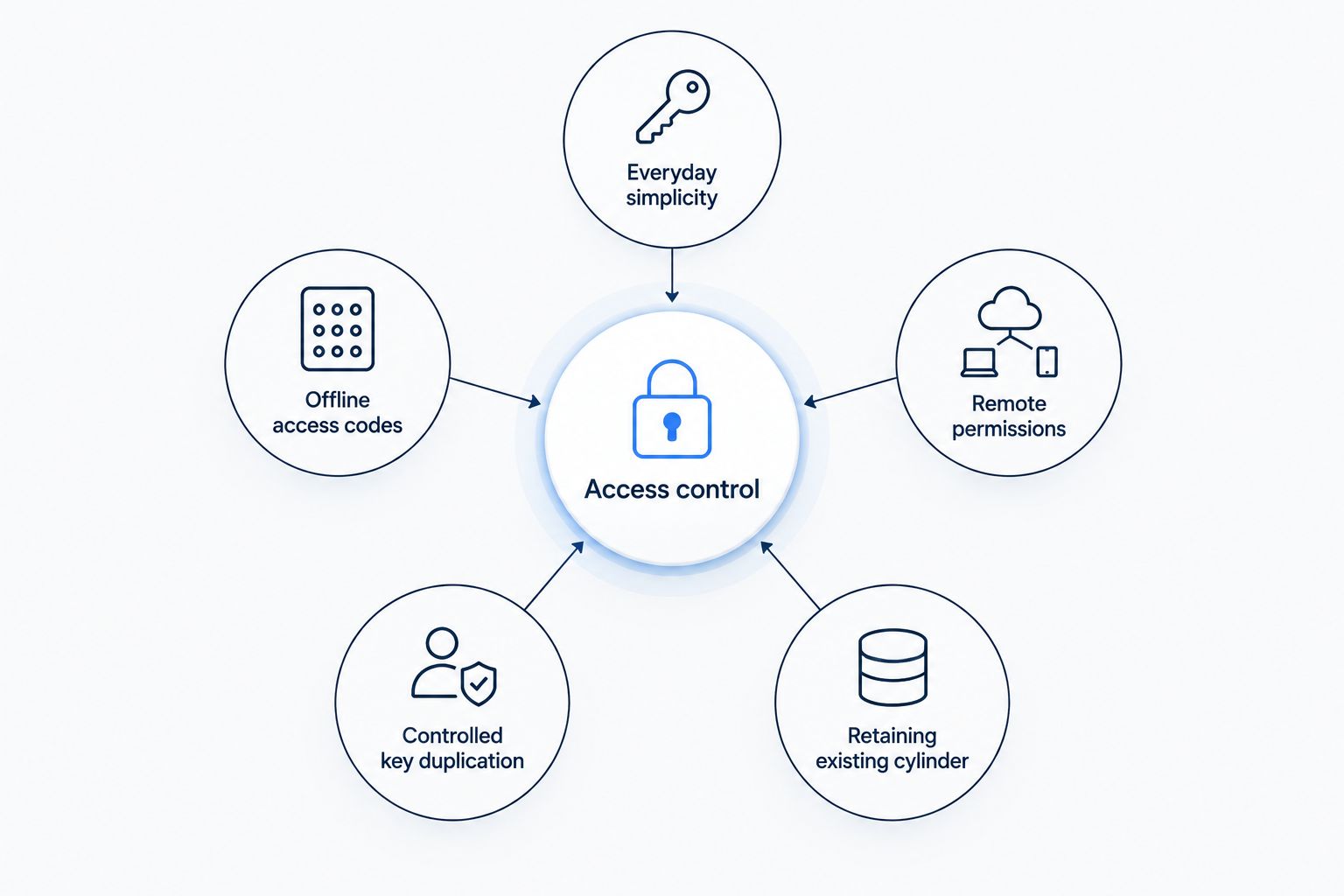
- Access control: Decide whether you need physical keys, local codes, remote permissions, or restricted key duplication.
- Failure recovery: Understand battery replacement, lost-key handling, connection loss, and the exact model's backup entry method.
ANSI/BHMA grading includes 3 numerical grades, with Grade 1 representing the highest performance level within the applicable grading system. Compare certifications under the relevant standard; residential certification also uses letter ratings, so a letter rating and a numerical grade are not interchangeable.
Deadbolt options at a glance
These are hardware configurations, not tested product-model rankings. Features differ within each category, so verify the exact model's documentation before buying.
| Rank and option | Best for | Standout feature | Key limitation |
|---|---|---|---|
| 1. Single-cylinder mechanical deadbolt | Everyday simplicity | Exterior key and interior thumbturn | Physical keys require distribution and recovery |
| 2. Nonconnected keypad deadbolt | Offline access codes | Code entry without relying on an internet connection | Batteries and code management require attention |
| 3. Connected smart deadbolt | Remote permissions | Remote access management on supported models | Connected functions depend on the model's network setup |
| 4. Restricted-key mechanical deadbolt | Controlled key duplication | Documented restrictions on obtaining duplicate keys | Replacement keys require the authorized process |
| 5. Interior retrofit smart lock | Retaining an existing cylinder | Adds interior electronic operation to compatible hardware | Existing exterior hardware remains part of the security system |
The decision starts with access, not electronics. Keep the default simple unless a specific access problem justifies another configuration.
1. Single-cylinder mechanical deadbolt: best for simple daily use
A single-cylinder mechanical deadbolt uses a key outside and a thumbturn inside. It is the default recommendation when you want straightforward locking without batteries, accounts, or connected features.
The configuration does not establish the lock's resistance to forced entry. You still need to compare the exact cylinder, bolt, strike, certification, and installation requirements. A basic operating method is not a substitute for documented hardware performance.
Single-cylinder mechanical deadbolt pros:
- No batteries to replace for ordinary operation.
- Interior thumbturn provides direct manual operation.
- No app account or network connection to maintain.
- Physical keys give household members a familiar access method.
Single-cylinder mechanical deadbolt cons:
- Lost or unreturned keys require an access-control decision.
- Ordinary keys do not inherently prevent unauthorized duplication.
- You cannot withdraw one person's access without addressing the shared key system.
Best for: Homeowners who want simple everyday entry and do not need individual access codes or remote permissions.
Before choosing a replacement, check whether your current lock is mechanically sound. If your only concern is who has a key, re-keying changes which key operates a compatible cylinder without necessarily replacing the entire lock.
For a 2026 replacement, prioritize fit and documented performance over decorative styling. Keep a spare key with a trusted person rather than in an obvious outdoor hiding place.
Verdict: Buy a single-cylinder mechanical deadbolt as the default when simple keyed access meets your needs.
2. Nonconnected keypad deadbolt: best for offline access codes
A nonconnected keypad deadbolt accepts entry codes locally rather than requiring an internet connection for ordinary code entry. It suits households that want fewer physical key exchanges without adding remote account management.
Check how the exact model creates, removes, and stores codes. Some keypad locks include a mechanical key cylinder; others use a different backup arrangement. Do not assume every keypad provides the same recovery method.
Nonconnected keypad deadbolt pros:
- Household members can enter without carrying a physical key.
- Separate supported codes make access easier to organize.
- Ordinary code entry does not depend on home internet service.
- Removing a supported individual code avoids collecting a physical key.
Nonconnected keypad deadbolt cons:
- Batteries require replacement and attention to low-power warnings.
- Shared codes can spread beyond the intended users.
- Remote code changes are not part of a nonconnected setup.
Best for: Households that want local code entry but have no need to manage the door from elsewhere.
Before buying, read the programming instructions—not just the feature summary. Confirm that someone in your household can change codes, recognize a low-battery warning, and use the documented backup method.
Assign separate codes when the model supports them, and remove codes when access ends. Avoid treating a permanently shared household code as a substitute for an access policy.
Verdict: Buy a nonconnected keypad deadbolt when offline code entry solves your access problem.
3. Connected smart deadbolt: best for remote permissions
A connected smart deadbolt adds supported remote functions through its network or hub arrangement. Depending on the exact model, those functions include managing permissions, checking reported lock status, or receiving activity notifications.
The reason to choose this category in 2026 is remote administration—not an assumption that connectivity makes the physical lock stronger. Compare the mechanical security and the connected features separately.
Connected smart deadbolt pros:
- Supported remote controls let you manage access away from home.
- Individual permissions help separate household and visitor access.
- Supported notifications provide information about lock activity.
- Remote access changes reduce dependence on exchanging keys.
Connected smart deadbolt cons:
- Remote functions depend on the required connectivity and equipment.
- Account security becomes part of managing the door.
- Battery maintenance and backup entry still need a plan.
Best for: Homeowners who regularly need to grant, withdraw, or check access while away.
Confirm which features work locally and which require a connection. Also verify whether any desired function requires additional hardware or an ongoing service arrangement; do not infer that from the word smart.
Use a unique account password and enable multifactor authentication where supported. Review permissions after a household change, and understand what the app's reported status actually confirms about the door.
Verdict: Buy a connected smart deadbolt for a defined remote-access need; skip it if local keys or codes already solve the problem.
4. Restricted-key mechanical deadbolt: best for key control
A restricted-key mechanical deadbolt uses a key system with a documented process for obtaining duplicates. The value is control over key distribution, not simply an unusual-looking key.
Restriction varies by system. Ask who can authorize a duplicate, where copies can be obtained, and what documentation is required. Do not treat the words restricted, patented, and high-security as interchangeable claims.
Restricted-key mechanical deadbolt pros:
- Authorized duplication procedures improve control over issued keys.
- A documented key-issuance process helps organize household access.
- Mechanical operation avoids batteries and connected accounts.
- The configuration suits people who prefer physical keys to codes.
Restricted-key mechanical deadbolt cons:
- Obtaining replacement keys involves the system's authorized process.
- Restriction alone does not establish forced-entry resistance.
- Lost keys still require an assessment of who can reach the property.
Best for: Homeowners whose main concern is controlling duplicate keys while retaining mechanical operation.
If you distribute keys to relatives, cleaners, or caregivers, write down who receives each one. A restricted system does not recover a key that has already been handed out.
For a 2026 purchase, request documentation for both the duplication policy and any claimed security certification. Evaluate these as separate benefits. If you actually need to revoke one person's access without changing everyone else's credentials, an individually managed code system addresses that problem more directly.
Verdict: Buy a restricted-key mechanical deadbolt for documented key control, not for the label alone.
5. Interior retrofit smart lock: best for keeping your cylinder
An interior retrofit smart lock replaces or attaches to the interior operating hardware of a compatible deadbolt while retaining the exterior cylinder. It is an access upgrade rather than a complete replacement of the existing locking assembly.
Compatibility is the deciding factor. Confirm the existing deadbolt type, interior clearance, mounting arrangement, and supported operation before choosing a retrofit device.
Interior retrofit smart lock pros:
- Compatible installations retain the existing exterior key cylinder.
- Existing physical keys remain useful when the cylinder is retained.
- Supported electronic functions add another way to manage access.
- Exterior hardware can remain unchanged.
Interior retrofit smart lock cons:
- Compatibility limits which existing deadbolts you can retain.
- Worn bolts, weak strikes, and damaged frames remain unresolved.
- Electronic operation adds battery and setup requirements.
Best for: Homeowners with sound, compatible hardware who specifically want to retain their existing cylinder and keys.
Test the existing deadbolt manually before considering a retrofit. It should extend and retract without pushing, pulling, or lifting the door. Correct alignment problems first; electronic operation should not be used to mask a binding bolt.
If the existing hardware needs replacement anyway, compare a complete replacement with a retrofit before committing. Retaining a cylinder only has value when that cylinder still fits your security and access needs.
Verdict: Buy an interior retrofit smart lock only after confirming compatibility and the condition of the existing deadbolt.
How these deadbolt choices are ranked
The ranking prioritizes straightforward daily operation, then separates the alternatives by access need. Certification, door compatibility, frame engagement, safe exit, access control, and failure recovery apply to every option.
This is a configuration guide, not a claim of laboratory testing or model-specific superiority. A well-specified lock in a lower-ranked category can be the right choice when its access arrangement matches your household.
Which deadbolt should you choose?
Choose a single-cylinder mechanical deadbolt if you are undecided. Move to a keypad for local codes, a connected model for remote permissions, a restricted-key system for duplication control, or a retrofit device to retain compatible hardware.
Before requesting a lock change from Primeaccesslocksmith, prepare these details:
- Whether you want new hardware, re-keying, or help deciding between them.
- Whether the current bolt binds or the door needs pressure to lock.
- Who needs access and how you want to withdraw it later.
- Whether keeping the existing key is a requirement.
After installation, test operation with the door open and closed. Confirm that the bolt fully extends, the interior release operates correctly, and every intended entry method works. Keep 2 working keys if the selected model uses a mechanical backup, and store them separately.
FAQ
What's the best deadbolt lock for home security in 2026?
A single-cylinder mechanical deadbolt is the default choice when you want straightforward keyed entry without batteries. Choose the exact model by certification, door compatibility, and installation requirements; use keypad or connected hardware when you need its specific access functions.
Is a smart deadbolt more secure than a regular deadbolt?
Connectivity alone does not make a deadbolt physically stronger. Compare the exact model's mechanical certification separately from remote controls, notifications, and account protections.
Should I replace my deadbolt or have it re-keyed?
Re-keying addresses which key operates a compatible cylinder; replacement addresses the hardware itself. If the lock is sound and your concern is an unreturned key, ask about re-keying before replacing the entire assembly.
Does a keypad deadbolt need Wi-Fi?
A nonconnected keypad deadbolt does not require Wi-Fi for ordinary local code entry. Connected models have different requirements, so check which functions depend on a network or hub.
Is a double-cylinder deadbolt a better choice for my front door?
Do not choose a double-cylinder deadbolt solely because it requires a key on both sides. Requiring an interior key can obstruct emergency escape; confirm applicable exit requirements before considering that arrangement.
Can I install a new deadbolt in the existing holes?
You can reuse existing door preparation only when it matches the replacement lock's requirements. Check bore dimensions, backset, door thickness, and mounting details, and correct any alignment problems before installation.
Can a mobile locksmith change locks at my Jacksonville home?
Primeaccesslocksmith provides on-site lock changes and re-keying for residents in Jacksonville and surrounding areas. Explain whether you need different hardware, different keys, or help with a lock that no longer operates correctly.
One last thing
Before adding another feature, close your door and turn the deadbolt slowly. If you must lift the handle or lean against the door, make alignment part of the repair—not an afterthought.
The right deadbolt should lock fully without a struggle. In 2026, that remains a more useful starting point than choosing hardware by its feature list alone.